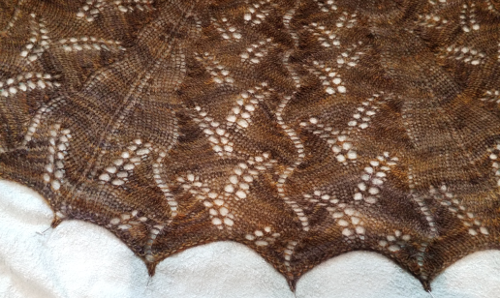
Mabon

Mabon is the eighth and final festival in the Wheel of the Year. This year, it falls on 22nd September, and is also known as the Autumnal Equinox or Harvest Home in the Northern Hemisphere, Spring Equinox in the Southern Hemisphere. The year has almost come full circle, the second harvest has finished: apples have been picked and stored, bread baked, enjoyed and shared. The year is winding down towards winter, but there are still fine days to be celebrated. Mabon is a time of contemplation, of looking back over the year that has passed and forward to the winter that is to come.

Mabon the shawl is a semicircle of texture. The pattern is a memorable sequence of stitches, rhythmic and contemplative. It can be knit in any weight of yarn; the pattern gives calculations for 4ply/fingering, DK and worsted weights. It uses short row techniques to achieve the semicircular shape and, since the shawl is worked in wedges, these can be knit in multiple colours. The samples show parti-colour (one half in teal, one in turquoise), alternating colours (one wedge in light grey, the next in darker grey), and all wedges the same colour. A page of blank schematics is provided at the end of the pattern for you to print out and experiment with choosing and placing colours.

Four different treatments for the final unifying top edge are described.

For details of the pattern requirements, see the pattern page at either Payhip or Ravelry.

Lughnasadh

Lughnasadh is the seventh and penultimate festival in the Wheel of the Year. It falls on 1st August, and is also know as Lammas. The first harvests have been gathered in: the flax crop, the early grains, soft fruits like blackcurrants and raspberries. Time to celebrate the bounty. The year is beginning to wane, we are halfway between Litha/midsummer and Mabon/equinox. The days are still warm but shorter, evenings a little cooler.

The light fingering sample in green and gold long colour-change yarn took one 100g ball of Schoppel Wolle Zauberball, colourway Zauberwald.

Lughnasadh the shawl is an asymmetrical triangle with a memorable all-over lace pattern, knit on the bias from the pointy end, gradually increasing in width. It can be knit in any lightweight yarn, to any size, with a choice of two grounds, garter or stocking stitch/stockinette; and two cast offs, standard stretchy or crochet chain cast off.

The golden yellow sample below was knit in Eden Cottage Milburn 4ply in colourway Harvest Gold. It took 146 g / 584 m / 639 yds or just under balls of yarn.

This shawl can be made to any size. Finished sizes of the samples shown are:
Light Fingering: 226 cm/90 ½” length along longest edge x 95 cm / 38” deep at its widest point.
4ply/fingering: 248 cm/99 ¼” length along longest edge x 117 cm / 46 ¾” deep at its widest point.

This pattern has both charts and written instructions. It has been thoroughly professionally tech edited, but has not been test knit except by me. Full pattern support is available by email.

Lughnasadh is available in both the Ravelry Granary Knits Store and the Payhip Granary Knits Store.

Crochet Chain Cast Off

Crochet chain cast off is a versatile and attractive scooped edging to finish a lacy knitted shawl. You do not need to be able to crochet to work it, although familiarity in handling a crochet hook will come in handy.

Tools required are just a crochet hook of an appropriate size, i.e. the same size in millimetres as the knitting needles used for the project (or as directed by the pattern). I used this cast off for my Lughnasadh shawl; the knitting needles used were 4 mm and so I used a 4 mm crochet hook for the edging.

The shawl ready to be cast off, crochet hook at the ready
For this particular pattern I work an ssk on the first two stitches
I place the resulting stitch of the ssk onto the crochet hook
For this pattern I begin with chain 4; all chains hereafter will be chain 3
Put the crochet hook through the next two stitches on the LH needle, as if to knit 2 together, wrap the yarn around the hook and pull through the two stitches
I now have 2 stitches on my crochet hook
Pull the stitch nearest the hook end through the first stitch, leaving one stitch on the crochet hook
Chain 3
Repeat the knit 2 together using the crochet hook on the next 2 stitches
Pull the stitch nearest the hook end through the first stitch on the crochet hook, as before
The two completed loops; in total 4 stitches have been cast off, not including the first 2 stitches of the row which were processed by ssk
The completed edge, showing loops positioned at the end of the columns of yarnovers.

The pattern for Lughnasadh will be available on 1st August 2025.

Litha

For the Solstice Weekend, Friday 20th to Sunday 22nd June 2025, this pattern will be half-price, no code needed.

Litha (pronounced “LEE-tha” or “lith-ah”) is a pagan festival and the sixth celebration in the Wheel of the Year.

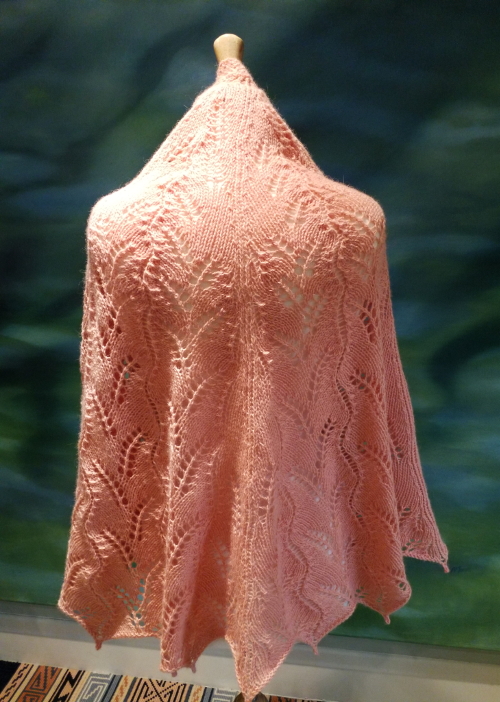
Litha the shawl is a three-quarters Pi circular shawl, knit in laceweight yarn for a light and airy layer. Despite their size the samples only weigh 136 g and 182 g (less than 5 ounces and less than 7 ounces).

Two sizes are described, approximately elbow length and wrist length on an adult. In accordance with the principles of pi shawls (as the diameter doubles, so does the circumference) this shawl has bands of pattern interspersed at set intervals with rows of increases. The increasingly wide bands of patterning include plain stocking stitch/stockinette, daisy stitch, and a field of tiny winged insects formed by simple cables. The lace edging along both sides is initially knit with the centre pattern, then curved around the front and formed into a knitted-on edge along the hem. There is a small amount of grafting to join the two edges. The shawl begins with a tab cast on, the tab being the first repeat of the lace edge; it can be knit either from the charts or from written instructions provided in a separate file.

The two samples show the two sizes described:

John Arbon Appledore Lace, elbow length: 67 cm/26 ¾” centre back neck to rounded hem x 73 cm / 29 ¼” deep at centre back.
Malabrigo Lace, wrist length: 77 cm/30 ¾” centre back neck to rounded hem x 85 cm / 34” deep at centre back.

Links to video and photo tutorials for the daisy stitch, provisional cast on and grafting are given in the pattern.

This pattern has been thoroughly professionally tech edited, but has not been test knit except by me.

This pattern is available from the Granary Knits Payhip Store and from Ravelry.

Beltane

Beltane is the fifth festival in the Wheel of the Year and the anglicised form of Bealtaine, the Gaelic Mayday. The days are growing longer, the Earth has warmed, it is the beginning of Summer.

When I was a child in the South of England, our village, as well as many others in the region, held a festival with decorated floats and the Queen of the May riding around the village, culminating in a party in the central small park. There were Morris Dancers, bonfires, maidens dancing around a maypole – everything you would associate with MayDay. Even in the 1980s in Kent, Morris Dancers greeted us at the train station on MayDay morning. Morris Dancing is still a common activity here in the North of England, but it takes place all year round, at various festivals, and is not restricted to just one celebration.

As well as dancing and May Queens, Beltane ceremonies centre on the lighting of special bonfires, with all household fires doused and then re-lit from the Beltane bonfire. Fire plays an important part in the inspiration for this design, from the bonfire motif of the centre to the flickering flames of the knitted-on edges.

Beltane the shawl is an Ascot or Stole, knit in 4ply/fingering yarn for a light and airy layer. It can be knit as a short narrow Ascot/neck-warmer, or a large elegant wrap; two sizes are given for narrow Ascot or wide Stole, but any width or length could be achieved. The pattern is worked from a provisional cast on, either from the charts or written instructions. Beltane has a fixed width border on either side of an adjustable central panel; the centre panel can be repeated as many times as you wish to alter the width. The shawl can be lengthened or shortened by increasing or decreasing the number of vertical repeats of the main chart.

The pattern can be worked from charts or from written instructions and is customisable.

The Beltane pattern is available from the Granary Knits pattern stores on Ravelry and Payhip.

Ostara

Ostara is the fourth festival in the Wheel of the Year. It falls on the Northern Hemisphere’s Spring Equinox, 20th March, and is also the celebration of Oestre, the goddess of fertility. Spring has arrived in the UK, leaves have appeared on many trees and shrubs, and daffodils are nodding in Spring breezes.

Ostara the shawl begins at the bottom left hand angle of a square and increases along the diagonal, the hypotenuse, with two halves of very different patterning, reflecting the equality of night and day. As it slowly grows, the leaves emerge along one edge and flowers begin to dot one half of the shawl. Folded along the centre spine it forms a warm layered shawl, opened out it becomes a lighter airy accessory for sunnier Spring days. I have chosen a lovely blend of wool and silk for this shawl, in a vibrant Spring green. Ostara can be blocked as a square, a rectangle, or a parallelogram. It can be worn in several ways: folded as a triangle along the diagonal centre stitch to show the flower side or the garter side; folded as a triangle across the diagonal to show one half flowers and one half garter; folded across the middle to make a narrower rectangle.

Ostara is an adaptable shawl, can be made to any size you choose, from a small square to a large enveloping folded triangle. Size is adjusted by repeating the main 24-row pattern; the sample shown, for instance, consists of a setup section followed by 11 repeats of the main section, and was blocked into a rectangle to give a shawl 137 cm/54 ¾” x 115 cm / 46”.

This construction lends itself readily to adaptation, and I have included, as a separate file, a lapghan pattern of the same construction but knit at a large gauge in bulky wool.

This pattern has been fully professionally tech edited, but has not been test knit except by me. Full pattern support is available by email.

Ostara is available to buy in the Granary Knits Payhip Store and Ravelry Store.

Imbolc

Imbolc is the second Celtic celebration and the third festival in the Wheel of the Year. It falls on the first day of February, and is also celebrated as St Brigid’s Day. Winter is still gripping the islands of Britain, but there are signs of the coming of Spring and a sense that the sun will return soon. Small buds are beginning to appear on trees and shrubs, and snowdrops are emerging and flowering, half hidden in borders. The early flowers are grateful for any rain, but in February we in the north of England sometimes get too much rainfall – the old country name for February is Fill-dyke referring to the overflowing ditches along rural roads.

Imbolc the shawl is a delicate beaded crescent/triangle hybrid, equally at home at a winter party or snuggled up beside a log fire. Its design suggests the rain using beads, as well as the promise of Spring in the bud motifs of its border. It is knit in 4ply/fingering weight yarn, and can be made in any size by repeating the main pattern, before working the border. Both charts and written instructions are provided.

Materials
Any 4ply/fingering weight yarn with good stitch definition and drape. The sample was knit in Eden Cottage Yarns Milburn 4ply; 85% Bluefaced Leicester 15% silk; 50 g per 200 m/ 218 yds; both the Fichu and Large Shawl are shown in shade Natural, using 1 and 4 balls respectively.
4 mm /#6 beads (optional); the sample beads are Debbie Abrahams in colour 34 Silver-lined Clear.

Tools
4 mm [US size 6] circular needle (for knitting flat), minimum 60 cm / 24” in length (or size required to obtain gauge).
Crochet hook size 1 mm [UK size 4, US size 10] or beading needle (optional).
Stitch markers, as many as you find helpful.
Tapestry needle for weaving in ends.
Blocking mat and pins (optional but recommended).

Tension
19 sts and 36 rows = 10 cm / 4” on 4 mm [US size 6] needles, over the reverse stocking stitch and beaded twisted stitch pattern after washing and blocking.

Finished size
Four sizes are described, but a larger shawl is possible if desired. I have named these sizes Fichu (Shawlette, Medium Shawl, Large Shawl). The table below shows approximate sizes and quantities of yarn and beads. Finished size of the two samples (smallest and largest) shown are:
Size 1 Fichu: 140 cm / 56” length along top x 26 cm / 10 ¼” deep at widest point.
Size 4 Large Shawl: 254 cm / 101 ¼” length along top x 48 cm / 19 ¼” deep at widest point.

This pattern has been fully professionally tech edited, but has not been test knit except by me. Full pattern support is available by email. The pattern is available as a PDF from the Granary Knits stores on Ravelry and on Payhip.

Samhain

Samhain (pronounced Sa-win, /ˈsɑːwɪn/) is the first of the Celtic/Pagan Sabbats or festivals in the great Wheel of the Year, ever turning. It is the celebration of Autumn’s End occurring on 31 October/1 November. The veil between the worlds is thin at this time, the year is dying.

Samhain is the name of a traditional Gaelic festival held around 1 November. The name and date were adopted by Wiccans for one of their four Greater Sabbats. It closely matches Halloween (31 October) and the two festivals are intertwined. For Wiccans, Samhain is a time to celebrate the lives of those who have passed on, and it often involves paying respect to ancestors, family members, elders of the faith, friends, pets, and other loved ones who have died. Aligned with the contemporary observance of Halloween and Day of the Dead, in some traditions the spirits of the departed are invited to attend the festivities. It is seen as a festival of darkness, which is balanced at the opposite point of the Wheel by the festival of Beltane, which is celebrated as a festival of light and fertility.

Samhain is a time for bonfires, honouring the ancestors, and for contemplation when entering the quiet part of the year. A time when the earth sleeps and humans (and animals) need warmth and shelter. A snug triangular shawl or cowl will keep you warm until the year turns and the earth awakens.

My interpretation of Samhain is of simplicity. It can be made as a cowl, using a single precious skein of 4ply/fingering yarn, or as a shawl. It can be knit in any weight of yarn, and can be made as long as you wish. As befits the time of the year, it gives warmth where it is needed. I chose reds and oranges for my samples, as well as a light grey reminiscent of the mists of Autumn. It can be worn any way you like, casually tied or fastened with a favourite brooch or shawl pin.

It can be knit in any weight yarn, in any type of yarn, in one colour or two. It is a warm double-thickness fabric using an interesting construction, with a simple but effective shape.

Samhain is available as a pdf download from the Granary Knits Ravelry store and from the Payhip store.

The Yorkshire Collection

For over a year now, I have been working on a collection of shawls and related accessories inspired by the Yorkshire countryside in which I live. It has been a magical experience, exploring my surroundings and being enthused by the landscape. The first two shawls in this collection, Harden Moss and Whitley Common, are available now, with more to come.

Harden Moss was inspired by the shapes of reservoirs in the High Peak District of Derbyshire and West Yorkshire. These typically have a distinct wide dam wall at one end gradually narrowing to a point, reflecting the shape of the valley that was flooded to create them. There are many such reservoirs dotted about all over the Peak District, varying in size from a small tarn to an entire rift such as Longdendale, flooded to provide water to local communities. This simple scrunchy garter shawl, worked sideways in a hazy laceweight yarn on very large needles, is quick to work, and the allover pattern of eyelets is easy to memorise. The pattern is available in the Granary Knits Payhip store and on Ravelry.
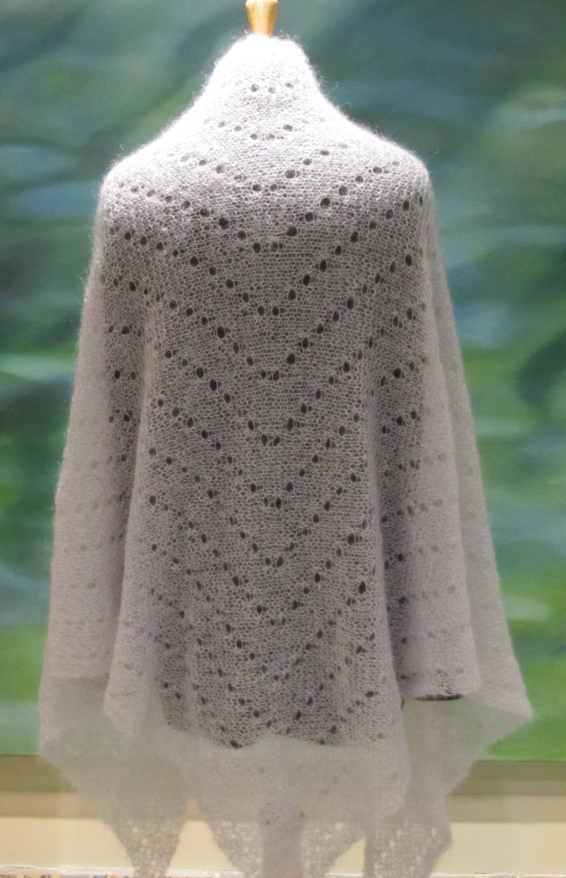
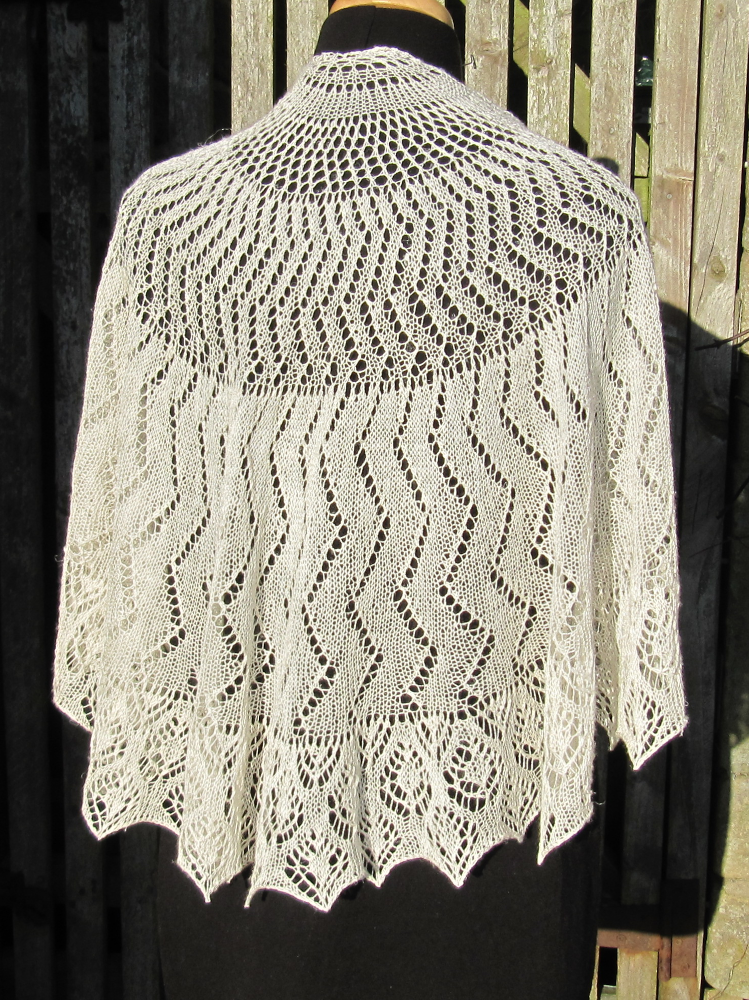
Whitley Common is a light capelet perfect for a summer wedding shawl. It’s shape is three-quarters-pi, and is covered in a graduated pattern of zigzags which mimics the many becks, streams, and rivulets that cover the heathery landscape. These lacy rivulets culminate in a border of flower motifs to represent the beautiful cotton grass that covers the common in summer. The pattern is available in the Granary Knits Payhip store and on Ravelry.
Sock Yarn Shawl: a new free pattern

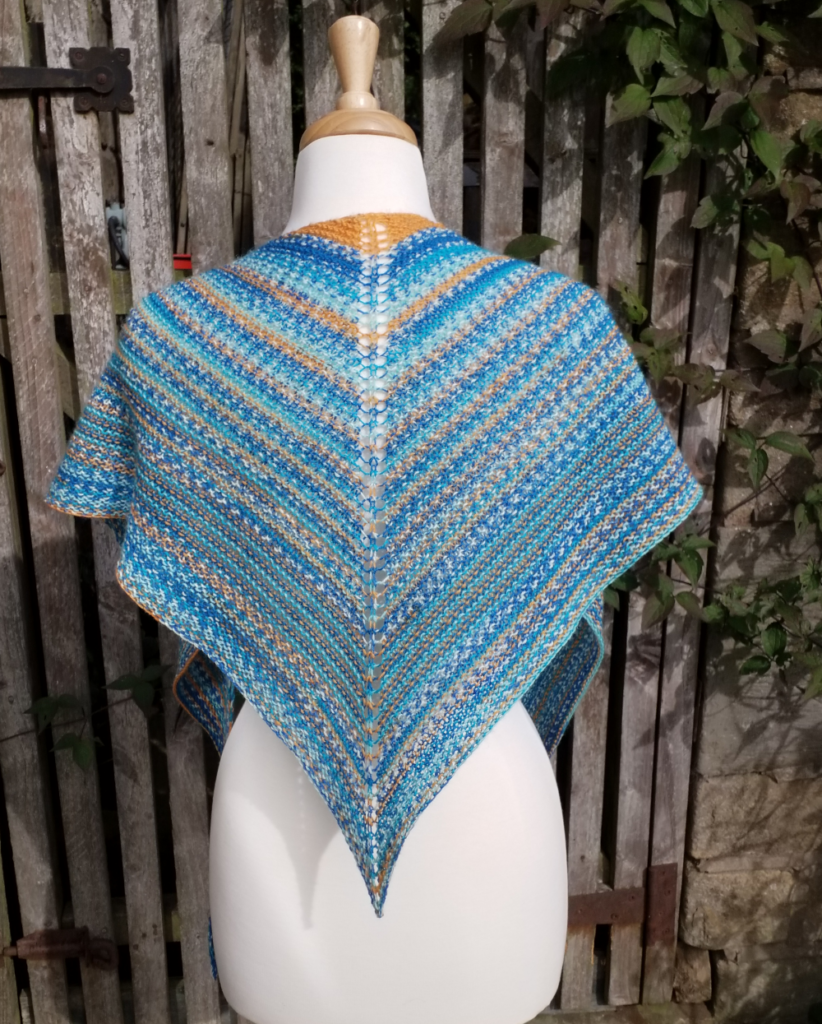
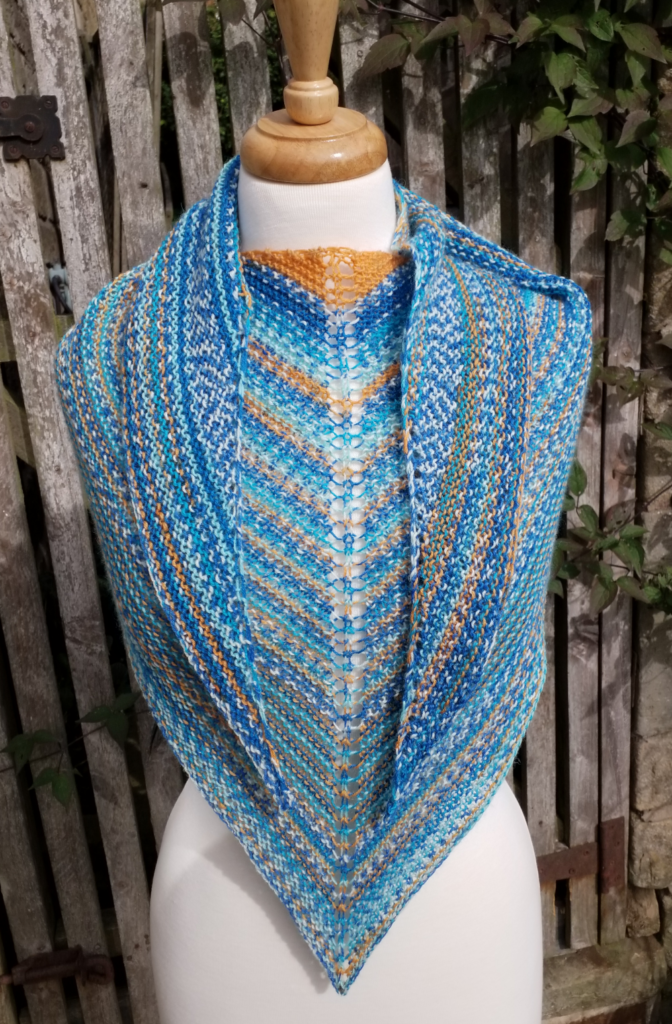
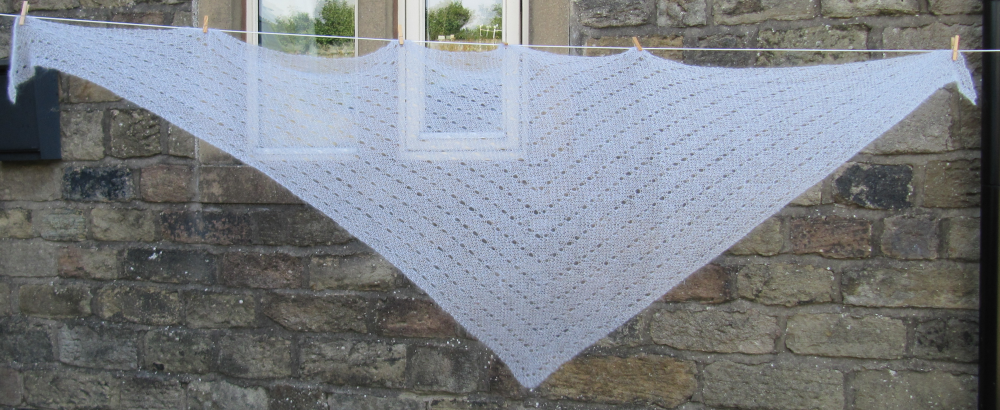
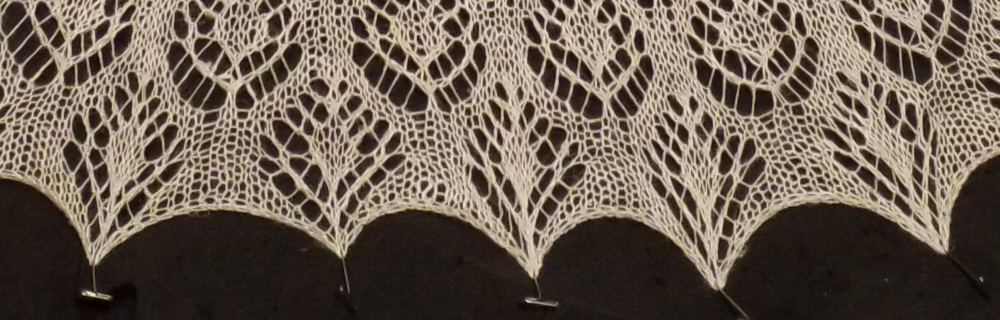
My first design release of the year is the easiest of easy shawls. Knit from any sock yarn you have in your stash, this scrunchy garter shawl is a perfect go-anywhere knit. Use up leftover scraps of yarn for a unique stripey look; or colour block two or more yarns. It can be made from any amount of yarn; the sample shown was knit with 100g of self patterning sock yarn from West Yorkshire Spinners, but you could use any fingering/4ply yarn.

The shawl features an open top edge and a simple stretchy cast off. This is the perfect go-anywhere knit, requires no special techniques, and will look great in any yarn.

Available now in the Payhip Granary Knits store .